Dependencies that are hard to anticipate
A technical fault can block a room, delay its inspection and affect an arrival. Teams need to see what is preventing the next step.

HOPR by RoomChecking
As rooms, floors, teams and events multiply, manual coordination becomes a bottleneck. HOPR by RoomChecking turns that volume into structured workflows: every task has a location, a priority, an owner and a status in one platform.
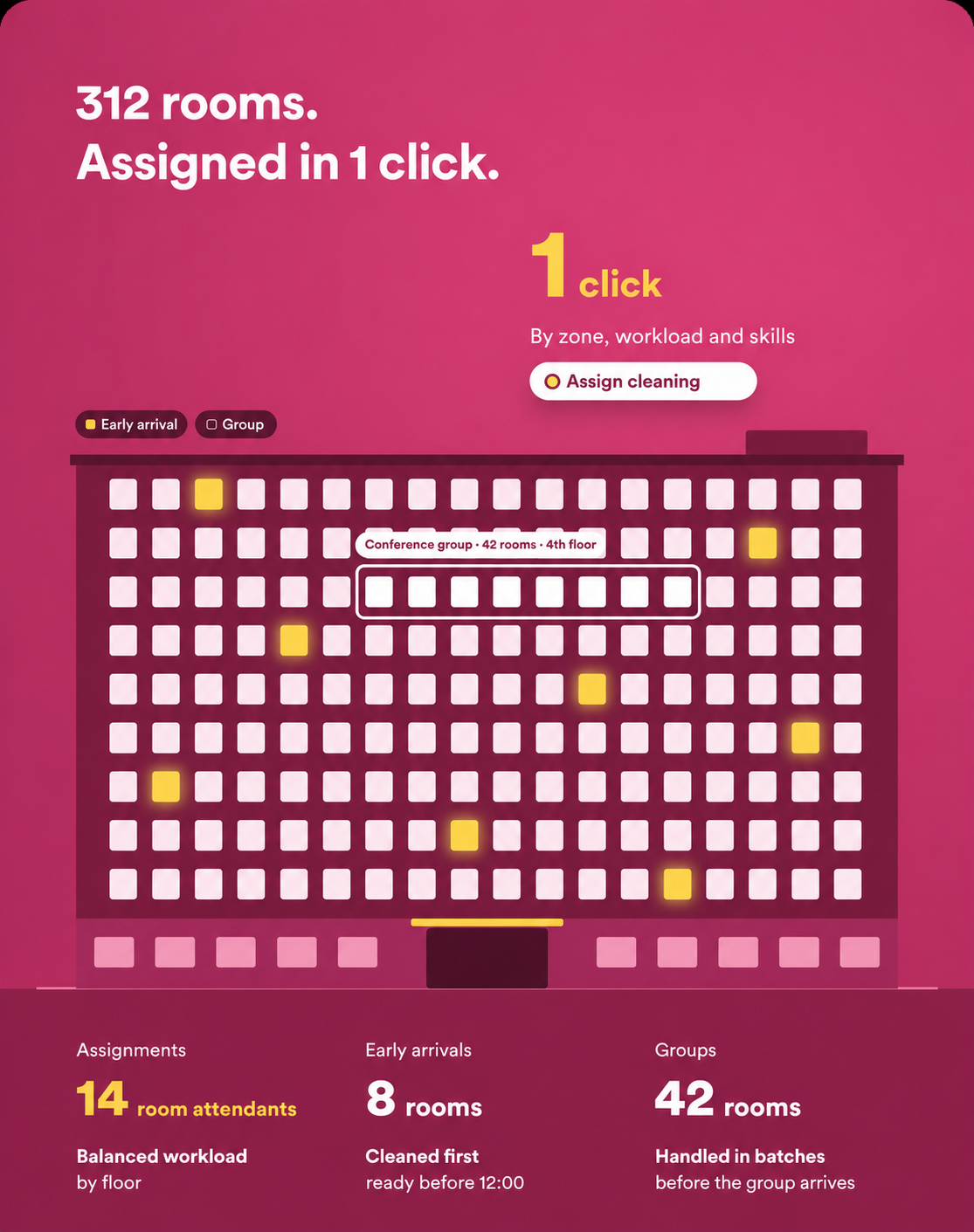
In a large hotel, dependencies create much of the operational pressure. A fault can delay a room inspection; an event changes priorities in public areas; an early arrival calls for a different sequence of work. Manually built assignments increase travel between floors and make decisions happen too late. HOPR maps buildings, zones, floors and skills so managers can act before pressure becomes a series of emergencies.
A technical fault can block a room, delay its inspection and affect an arrival. Teams need to see what is preventing the next step.
Scattered assignments across floors and buildings lengthen rounds and reduce the time available to complete the work.
A conference, banquet or early arrival changes the workload of several departments at once.
Group work by building or floor, then balance the workload using your assignment rules and the skills available.
Prepare, group, assign or close batches of tasks for a conference, banquet or busy changeover day.
Make critical steps mandatory, retain responses and attach photos to the relevant inspection.
Set up coordinated housekeeping, F&B, porter and inspection tasks around an event.
Compare delays, incidents, recurring issues and costs while retaining access to the detail of each zone.
Follow a busy day from the first priorities to the final review.
The daily schedule identifies departures, priority arrivals and the spaces involved in the event.
Tasks are grouped by zone, and rooms are assigned according to workload and skill requirements.
An event template creates the checks, resets and interventions needed in meeting rooms and circulation areas.
Problems spotted during cleaning become maintenance tasks with a location and supporting evidence.
The manager tracks delays, reassigns tasks in bulk when needed and retains the history for the debrief.
Spend less time rebuilding the daily plan.
Limit unnecessary travel between buildings and floors.
Spot the dependencies preventing a room or space from becoming available.
Give leadership a consolidated picture without hiding the operational detail.
Deployment begins with your zones, volumes, roles and assignment rules. The PMS connection supplies stay events. Event templates and escalation levels are then tested on a representative area before they are rolled out more widely.
Yes. Work can be structured by property, building, zone, floor and section to locate tasks and adapt assignments.
Bulk actions let managers work with groups of tasks. The demo clarifies the operations available for your organisation and assignment rules.
Templates bring together the tasks expected from each department, with deadlines and checks. They provide a shared framework for housekeeping, F&B, porters and supervisors.
Consolidated views can be filtered by building, zone or team to move from the overall workload to the details of execution.
No. The PMS provides stay data; HOPR turns it into assigned, tracked and checked work. The available data exchanges depend on your integration.